

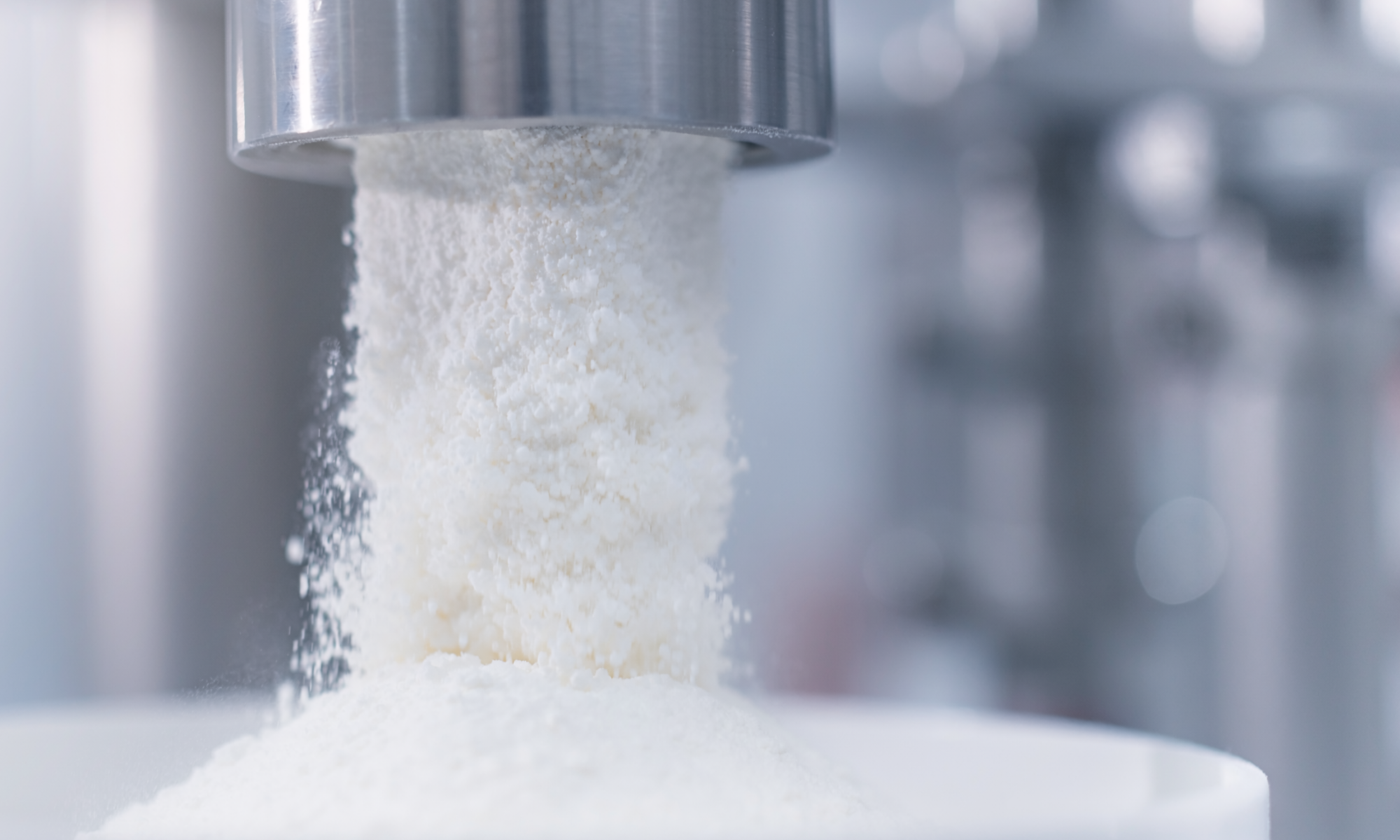
Air Imbalance and Material “Burping”
A common issue in powder transfer systems is the uncontrolled release of air from hoppers during filling or discharge.
As powder enters a hopper, displaced air must escape. If it cannot, pressure builds. Eventually, the system releases that pressure suddenly – forcing air and product back out of the inlet.
Operators often describe this as “burping.”
- Product is pushed back up through the inlet
- Dust and fines escape into the surrounding environment
- Temporary solutions (like socks or containment bags) fill repeatedly with material
- Cleaning requirements increase, and processing consistency suffers
This is not just a nuisance. It impacts throughput, sanitation, and overall system reliability.
Additionally, worn or undersized airlocks can allow leakage, further disrupting pressure balance within the system.
Addressing Airflow and System Performance
One effective way to resolve these types of material handling issues is by addressing airflow first, then optimizing the surrounding equipment as needed.
Rather than immediately replacing large portions of the system, the process should begin by stabilizing air movement. Once airflow is properly controlled, it becomes easier to identify other inefficiencies and make targeted improvements that support consistent operation.
1. Pressure Relief Through Bin Venting
- Capture displaced air during filling
- Prevent pressure buildup inside the vessel
- Retain product while allowing clean air discharge
2. Sealing Systems with Upgraded Airlocks
- Improved sealing to reduce air leakage
- Easier access for inspection and cleaning
- Reduced maintenance complexity
In many cases, simplifying maintenance procedures directly supports better system uptime and sanitation practices.
Together, these changes address immediate airflow issues while laying the groundwork for further system improvements.
Rethinking Powder Hopper Design
Existing industrial hopper design can limit performance. Older layouts often lack:
- Adequate clean-out access
- Proper geometry to support consistent flow
- Structural capacity for upgraded downstream equipment
Designing for Real-World Performance
In many facilities, hoppers are expected to do more than simply hold material. They must support consistent flow, integrate with surrounding equipment, and allow for efficient cleaning between production runs.
Effective industrial hopper design typically focuses on a few key areas:
Flow Performance
- Steeper cone angles can help promote consistent discharge
- Smooth internal surfaces provide a key hopper bridging solution by reducing material buildup and promoting consistent flow
Structural Considerations
- Reinforced outlet connections help support the weight of modern airlocks and downstream equipment
- Proper structural support helps prevent long-term wear or misalignment
Cleanability and Accessibility
- Multiple access points improve operator reach
- Thoughtful door placement minimizes areas where material can collect
- Designs that reduce ledges or flat surfaces help prevent buildup
Working Within Existing Systems
Most upgrades take place within operating facilities.
This means new equipment must often integrate with:
- Existing packaging or processing equipment
- Fixed connection points or elevations
- Limited installation access
In these environments, success depends on designing equipment that fits the process as it currently exists—not just how it would ideally be arranged.
Accounting for these real-world constraints early helps reduce installation challenges and ensures a smoother integration.
The Result: System Changes that Support A More Stable and Flexible Process
More Consistent Material Flow
Improved Sanitation and Changeover
Reduced Maintenance Burden
Better System Integration
Key Takeaways for Engineers and Operators
Many common powder handling challenges — including material loss, inconsistent flow, and bridging — call for hopper bridging solutions rooted in airflow control and equipment design.
Addressing these issues typically involves:
- Managing air movement within the system
- Ensuring proper sealing at key transition points
- Designing equipment for accessibility and cleanability
- Accounting for real-world installation and integration constraints
About HaFSBX
HaFSBX has over 50 years of providing proven solutions to dry and liquid ingredient handling challenges.
We design turnkey systems for projects of all sizes. Our team understands our customers’ concerns and takes the time to listen, develop a plan, and communicate along the way. If you need someone you can trust and want to eliminate the stress of managing the details of your next project, contact us today to discuss your next project and how our team can help.
About the Author – Caleb Meyer
Caleb Meyer, a chemical engineer from the University of Minnesota, brings a strong technical foundation and a practical approach to delivering effective solutions in the ingredient handling industry. With experience spanning both engineering and customer-focused roles, he supports projects with a focus on performance, quality, and real-world application.