
U.S.A. Based Manufacturer.
Supporting Businesses Worldwide.

FIND US: 1140 Gervais Avenue, Maplewood, MN 55109

CONTACT: (651) 653-5098
sales@hafequipment.com

HāF Equipment Acquires Semi-Bulk Systems, Expanding Ingredient Handling Capabilities

HāF Equipment Acquires Semi-Bulk Systems, Expanding Ingredient Handling Capabilities…Read More

Designing Surge Storage Solutions for Cocoa Handling in Volatile Supply Chains

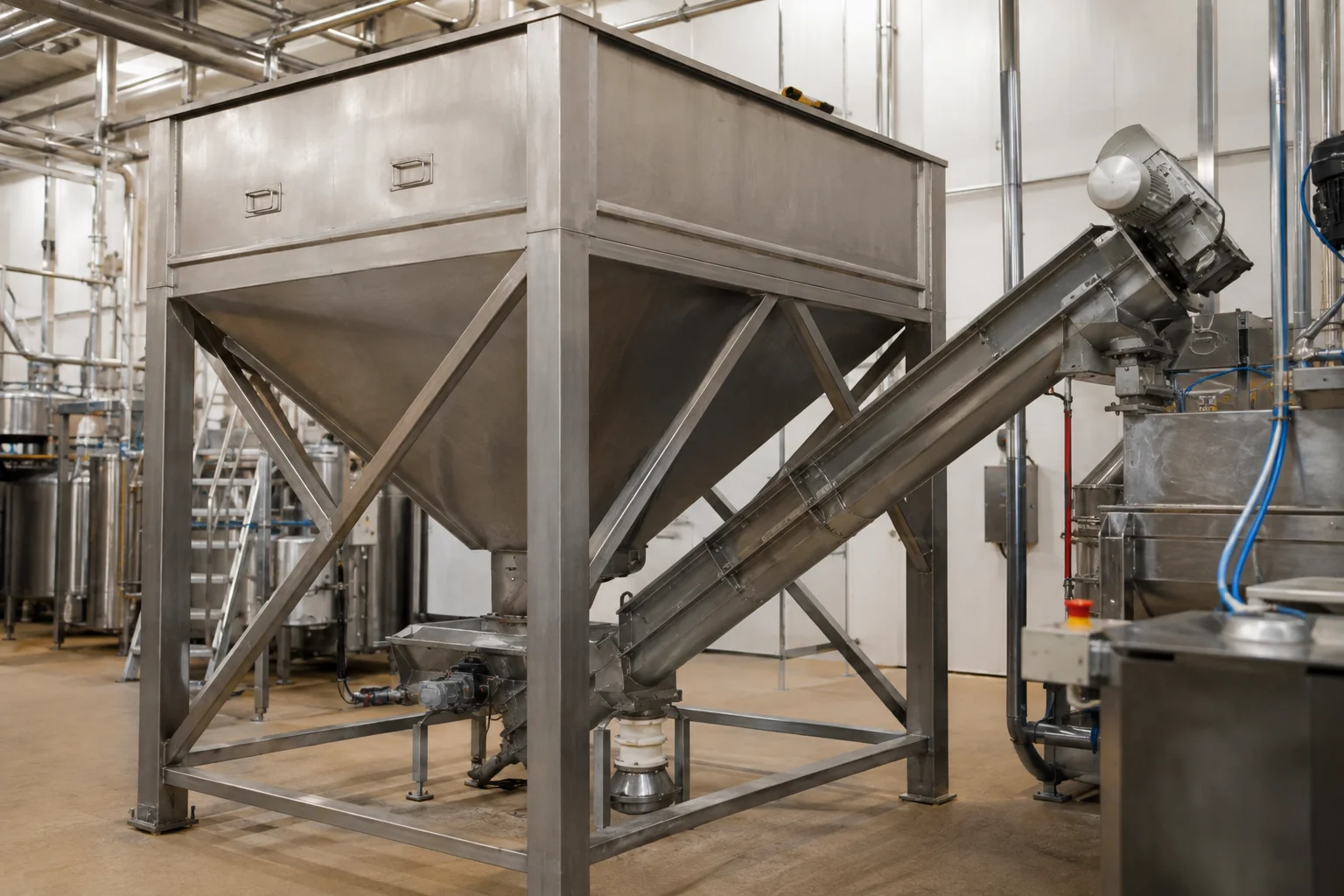
Stainless steel surge bin and screw feeder system for cocoa powder handling in a manufacturing facility
by Sam Edgerton

Cocoa powder presents challenges in bulk material handling due to its variable fat content, poor flow characteristics, and sensitivity to moisture. In periods of supply chain volatility, manufacturers increasingly rely on surge storage systems to decouple procurement from production and improve operational resilience. This article explores the engineering considerations behind a surge bin system designed for cocoa handling, with a focus on flow reliability, space constraints, and hygienic design.

Cocoa Handling Challenges in Modern Manufacturing

Cocoa is a widely used ingredient across food and confectionery applications, yet it remains one of the more difficult powders to store and convey consistently. External factors such as agricultural variability, logistics disruptions, and regulatory changes can drive irregular delivery schedules, making on-site buffering a necessity for many facilities. From a process perspective, cocoa powder introduces several technical challenges:
  • Poor flowability, particularly at higher fat contents
  • Tendency to pack, bridge, or rat-hole in static hoppers
  • Dust generation, requiring appropriate containment and filtration
  • Strict hygienic requirements, especially in food-grade environments
Addressing these issues requires purpose-built storage and discharge equipment rather than standard commodity hoppers.

Engineering Objectives for Cocoa Surge Storage

When designing a surge storage system for cocoa, several core objectives typically guide the engineering process:

    • Increased surge capacity to buffer upstream supply variability
    • Reliable discharge despite challenging material properties
    • Minimal facility impact, particularly in retrofit installations
    • Compatibility with existing conveying systems
    • Food-grade construction and maintainability

Meeting these objectives simultaneously often necessitates a custom-engineered solution rather than an offtheshelf bin.

Surge Bin Design Considerations

Storage Geometry and Construction

HaF designs surge bins to maximize usable storage volume within a constrained footprint. Cylindrical stainless steel construction is commonly selected for food applications due to its cleanability, corrosion resistance, and durability. Bin height and diameter are optimized to balance capacity, headroom limitations, and downstream feeding requirements.

Select the Correct Discharge

Every application is different.  Cocoa’s flow behavior makes gravity discharge unreliable in most cases. To address this, HaF spends time reviewing space constraints, and what is upstream and downstream of the surge bin, to select the correct discharge method out of the surge bin so that the discharge system:

  • Prevents material compaction
  • Promotes firstin, firstout (FIFO) flow
  • Reduces bridging and ratholing
  • Improves consistency at the feeder inlet

HaF has several methods to promote cocoa flow out of a surge bin.  Selecting the correct discharge method is particularly critical for powders with variable fat content.

Metered Feeding

Downstream of the bin activator, an inclined screw feeder can be used to meter cocoa into the conveying or processing system. Screw feeders provide:

  • Controlled, repeatable feed rates
  • Positive material movement independent of head pressure
  • Isolation between storage and process demand

Inclination and screw geometry are selected based on throughput requirements and bulk density.

Dust Control and Air Management

Cocoa powder is inherently dusty, making air management an essential component of surge bin design. A bin vent dust collector is typically mounted on the bin to:

  • Allow displaced air to escape during filling
  • Prevent dust migration into the surrounding environment
  • Maintain negative pressure balance during discharge

Design features such as toolfree filter access and integrated silencers support both maintenance efficiency and operator comfort.

Material Properties Driving Design Decisions

Understanding cocoa’s physical characteristics is critical to a successful system design:

  • Bulk density: Commonly in the range of 20–30 lb/ft³, depending on processing and fat content
  • Fat content: Can exceed 20%, contributing to cohesion and smearing
  • Moisture sensitivity: Excess moisture increases clumping and flow resistance
  • Flow behavior: Classified as cohesive, requiring mechanical assistance for discharge

These properties justify the use of the correct discharge devices, controlled feeding, and sealed, hygienic construction.

Overcoming Space and Integration Constraints

In retrofit installations, physical space often becomes the primary constraint. Achieving meaningful surge capacity without building modifications requires close coordination between process engineering and mechanical design. Custom bin proportions, tailored support structures, and flexible inlet configurations allow the system to integrate with existing bulk bag unloaders, truck unloading stations, or conveyors.

Equally important is compatibility with upstream and downstream equipment. Designing standardized interfaces simplifies installation and reduces commissioning risk, particularly in facilities with mixed legacy and new equipment.

Key Engineering Takeaways

  • Material-specific design is essential: Cocoa’s flow challenges cannot be addressed with generic storage solutions.
  • Selecting the correct discharge method can improve reliability: Significantly reduce downtime associated with bridging and poor flow.
  • Custom geometry maximizes value: Tailored dimensions enable higher capacity without structural changes.
  • Operator-focused features matter: Easy access, cleanability, and low-maintenance components can improve long-term system performance.

Conclusion

Surge bins play a critical role in stabilizing production when handling challenging powders such as cocoa. By combining custom geometry, discharge technology, controlled feeding, and hygienic design, manufacturers can significantly improve both process reliability and supply chain flexibility. Thoughtful engineering—grounded in material science and practical constraints—remains the key to successful bulk ingredient handling. Contact HaF if you need help handling challenging powders!

About HaFSBX
HaFSBX has over 50 years of providing proven solutions to dry and liquid ingredient handling challenges.

We design turnkey systems for projects of all sizes. Our team understands our customers’ concerns and takes the time to listen, develop a plan, and communicate along the way. If you need someone you can trust and want to eliminate the stress of managing the details of your next project, contact us today to discuss your next project and how our team can help.

About the Author – Sam Edgerton

Sam Edgerton, a mechanical engineer from Purdue University, brings a strong engineering foundation and a practical, solutions-focused approach to the ingredient handling industry. With experience supporting engineered systems and project execution, he contributes to delivering efficient, reliable solutions that align with performance and quality goals.
Is Moisture or Sugar Buildup Slowing Down Your Confectionery Process?

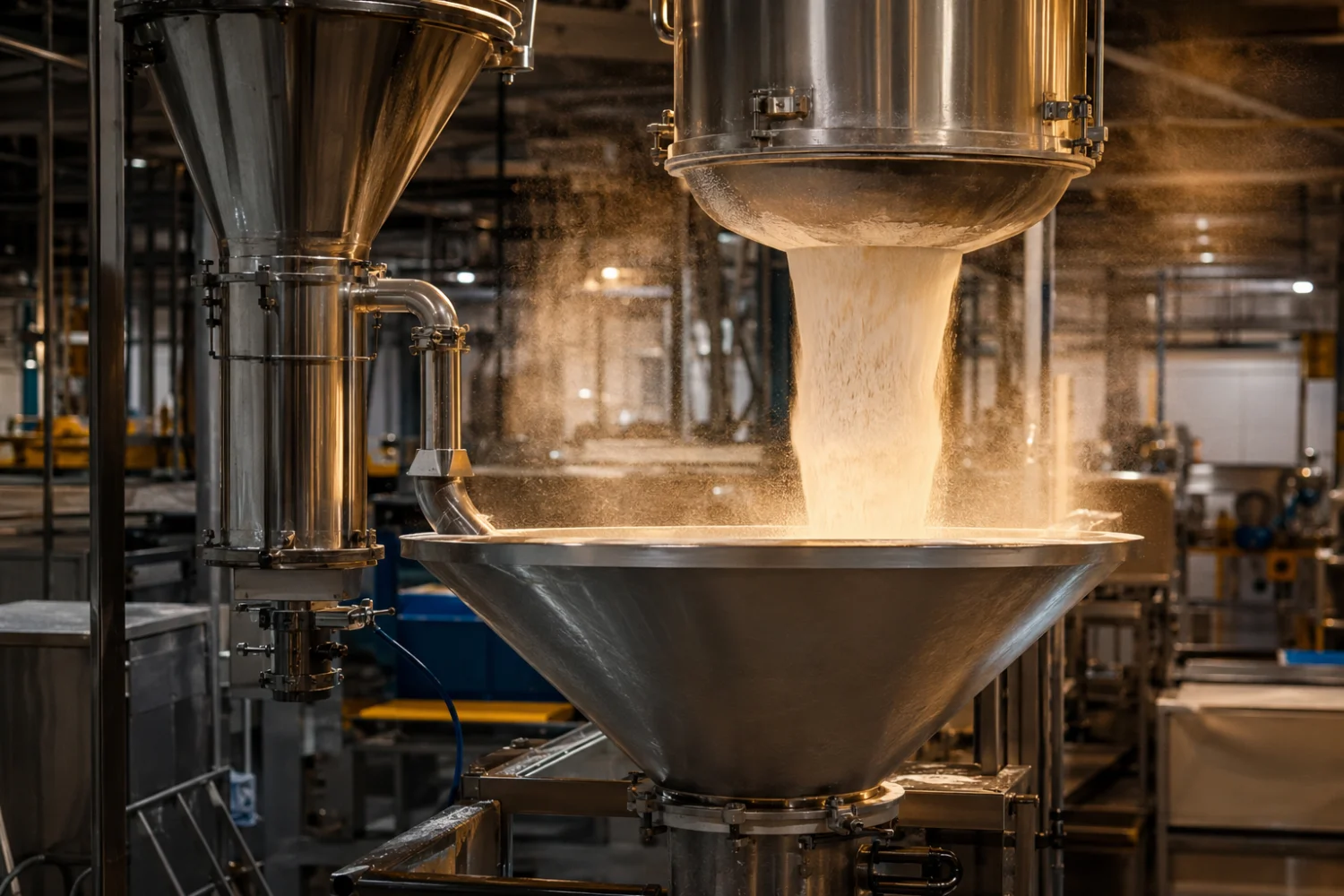
tainless steel powder handling equipment and filter receiver in a confectionery manufacturing facility with visible sugar dust
by Luke Schwirtz

In confectionery production, consistency is everything.

Whether you’re handling sugar, powdered coatings, or ingredients, even small process issues can have a noticeable impact. Material that doesn’t flow properly, product that clumps unexpectedly, or equipment that requires frequent intervention—these are the kinds of challenges that slow production and increase operational frustration.

Often, the root cause isn’t a single failure. It’s the gradual impact of aging equipment combined with the demands of modern production and safety expectations.

The Challenge: Moisture, Buildup, and Aging Equipment

Sugar-based materials are particularly sensitive to their environment.

When moisture enters the process—even in small amounts—it can quickly lead to:

  • Clumping inside filter receivers
  • Material buildup along walls and discharge points
  • Bridging that interrupts consistent discharge
  • Increased manual intervention to keep product moving
At the same time, older equipment may introduce additional challenges:
  • Sealing surfaces that no longer prevent environmental infiltration
  • Access points that are difficult to clean or maintain
  • Geometry that was not designed for long-term handling of cohesive materials

In many confectionery operations, these issues develop gradually. What starts as occasional buildup can turn into frequent maintenance, reduced throughput, and inconsistent product quality.

Additionally, safety expectations have evolved. Dust hazard analyses often identify gaps in legacy equipment—especially when handling combustible materials like sugar.

The Approach: Addressing Performance and Reliability Together

One effective way to resolve these issues is by evaluating both performance limitations and safety considerations at the same time.

In some cases, targeted updates can extend the life of existing equipment. In others, replacing outdated assets provides a more reliable long-term solution.

The key is focusing on the areas that directly impact daily operation.

1. Improving Sealing to Protect Product Quality

For confectionery applications, sealing is critical.

If ambient moisture enters a receiver, it can quickly affect how sugar behaves—leading to clumping, sticking, and inconsistent flow.

Upgrading sealing designs can:

  • Prevent moisture intrusion
  • Maintain product consistency
  • Reduce buildup inside equipment
Even relatively simple improvements—such as converting to more robust bolted sealing surfaces—can dramatically reduce these issues.

2. Supporting Operators with Better Access

When sugar begins to bridge or accumulate, operators often need to intervene.

If equipment does not support easy access, this becomes time-consuming and inconsistent.

Adding well-placed access points can:

  • Allow operators to quickly break up material buildup
  • Reduce downtime during production
  • Improve overall process control

These changes don’t alter the material itself—but they make the system easier to manage under real operating conditions.

3. Optimizing Geometry for Sugar Handling

Material flow in confectionery applications is closely tied to equipment geometry.

Sugar, flour, and similar materials can behave unpredictably, especially when exposed to moisture or compaction.

Improving geometry—such as increasing cone angles—can:

  • Promote more consistent discharge
  • Reduce bridging and hang-up
  • Minimize the need for manual intervention
Small design adjustments can make a significant difference in how reliably the system performs.

Expanding the Solution: Updating Safety and System Design

As performance issues are addressed, many confectionery manufacturers also take the opportunity to align equipment with modern safety expectations.

Dust hazards are a known concern in sugar handling environments. As a result, facilities often evaluate:

  • Explosion mitigation strategies
  • Isolation at key process points
  • Long-term maintenance requirements for safety systems

In some cases, replacing equipment allows these updates to be integrated directly into the design—rather than retrofitted later.

Selecting solutions that balance safety and simplicity is often a priority. Passive systems, for example, can reduce ongoing maintenance while still meeting safety requirements.

Designing for Real-World Confectionery Operations

In active facilities, upgrades must work within existing processes.

New equipment needs to integrate with:

  • Established production lines
  • Existing layouts and connection points
  • Operators who are familiar with current systems

The most effective solutions recognize these constraints.

Instead of forcing major process changes, they focus on:

  • Maintaining familiar configurations
  • Improving key performance areas
  • Simplifying installation and startup

This approach reduces disruption while still delivering meaningful improvements.

The Result: A More Reliable Confectionery Process

When equipment is updated with both product behavior and operator needs in mind, the benefits extend across the operation.

Improved Product Consistency

Better sealing helps prevent moisture-related clumping, supporting more uniform material flow.

Reduced Buildup and Bridging

Improved geometry and accessibility minimize areas where sugar can accumulate.

Less Operator Intervention

Systems designed for real-world conditions reduce the need for frequent manual adjustments.

Enhanced Safety Alignment

Updated equipment helps meet current safety expectations for handling combustible materials.

Simplified Maintenance and Operation

Accessible designs and lower-maintenance components make day-to-day operation more predictable.

Key Takeaways for Confectionery Manufacturers

If your process involves sugar or similar materials, and you’re experiencing buildup, inconsistent flow, or increasing maintenance requirements, the cause is often tied to equipment design and environmental control.

Addressing these challenges may involve:

  • Improving sealing to prevent moisture intrusion
  • Updating geometry to support consistent flow
  • Adding operator-friendly access points
  • Aligning equipment with current safety requirements
  • Evaluating when replacement provides more value than continued modification

In many cases, targeted updates—or strategic equipment replacements—can restore reliability, improve product quality, and make your system easier to operate over time.

At HaF Equipment, we work with confectionery manufacturers to evaluate these types of challenges and develop practical solutions that fit within existing operations. Whether the need is improving sealing, updating equipment design, or aligning with current safety requirements, our team focuses on applying real-world experience to create systems that are easier to operate, maintain, and scale over time.

About HaFSBX
HaFSBX has over 50 years of providing proven solutions to dry and liquid ingredient handling challenges.

We design turnkey systems for projects of all sizes. Our team understands our customers’ concerns and takes the time to listen, develop a plan, and communicate along the way. If you need someone you can trust and want to eliminate the stress of managing the details of your next project, contact us today to discuss your next project and how our team can help.

About the Author – Luke Schwirtz

Luke Schwirtz is a Project Engineer at HaFSBX. He has a strong track record of implementing cost-effective automation solutions and leading process improvements that enhance performance, increase efficiency, and support overall quality across projects.

Is your Hopper Burping?

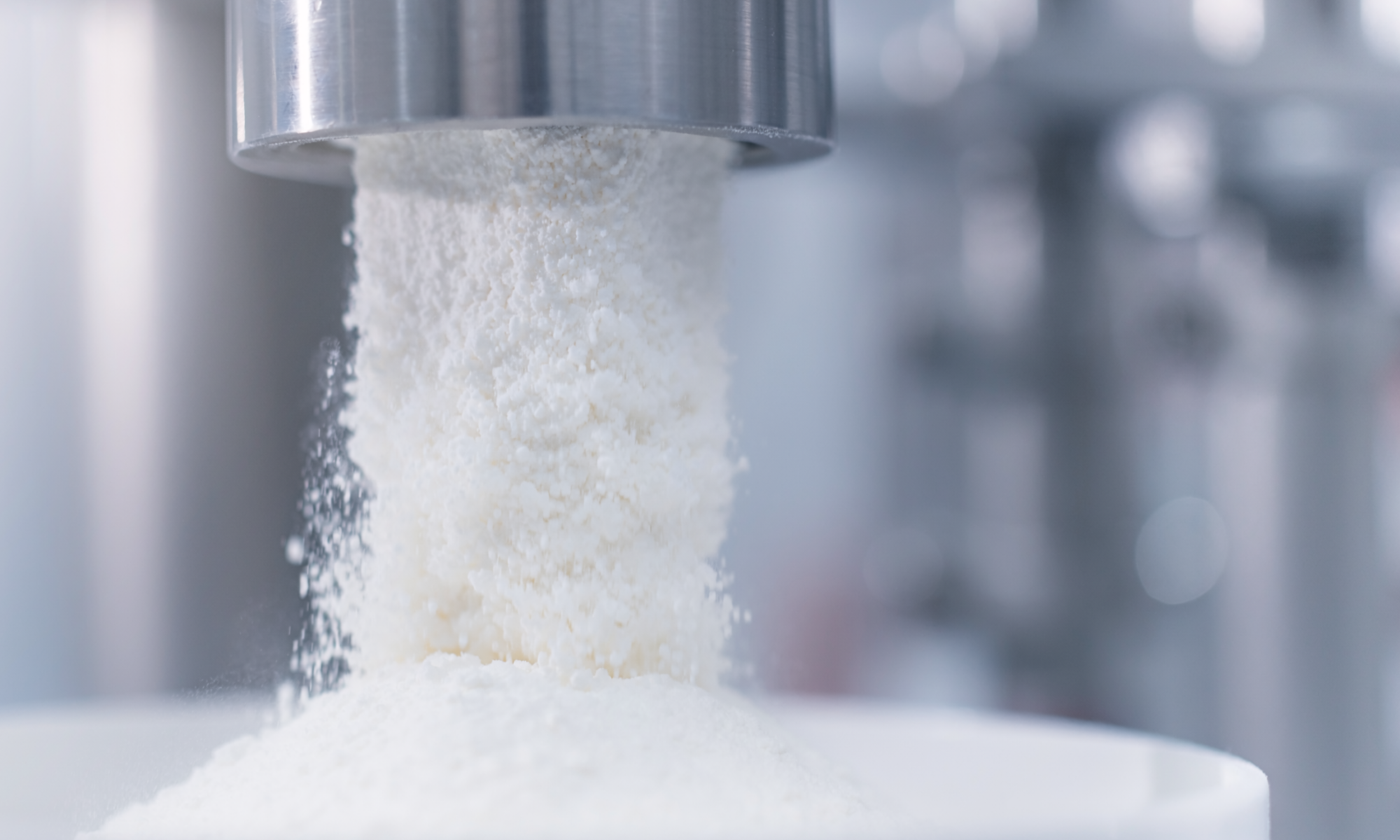
Manufacturing Powder Substance and output from machine. Powder Material Handling Equipment.
by Caleb Meyer
In many powder handling systems, performance challenges don’t originate from a single piece of equipment. Instead, they develop across the full process—where air movement, material flow, and equipment design intersect.
This is especially true in systems that feed packaging operations. When air is not properly controlled, even a well-designed process can struggle. The result is inconsistent flow, material loss, sanitation concerns, and operational inefficiencies.

Air Imbalance and Material “Burping”

A common issue in powder transfer systems is the uncontrolled release of air from hoppers during filling or discharge.

As powder enters a hopper, displaced air must escape. If it cannot, pressure builds. Eventually, the system releases that pressure suddenly – forcing air and product back out of the inlet.

Operators often describe this as “burping.”

In this condition:
  • Product is pushed back up through the inlet
  • Dust and fines escape into the surrounding environment
  • Temporary solutions (like socks or containment bags) fill repeatedly with material
  • Cleaning requirements increase, and processing consistency suffers

This is not just a nuisance. It impacts throughput, sanitation, and overall system reliability.

Additionally, worn or undersized airlocks can allow leakage, further disrupting pressure balance within the system.

Addressing Airflow and System Performance

One effective way to resolve these types of material handling issues is by addressing airflow first, then optimizing the surrounding equipment as needed.

Rather than immediately replacing large portions of the system, the process should begin by stabilizing air movement. Once airflow is properly controlled, it becomes easier to identify other inefficiencies and make targeted improvements that support consistent operation.

1. Pressure Relief Through Bin Venting

The first step is to provide a controlled path for air to escape.
Bin vents or compact filter receivers can be installed at key inlet points to:
  • Capture displaced air during filling
  • Prevent pressure buildup inside the vessel
  • Retain product while allowing clean air discharge
By regulating airflow at the source, the system becomes more stable and predictable.

2. Sealing Systems with Upgraded Airlocks

Airlocks are essential for maintaining proper pressure boundaries between equipment.
Upgrading to quick-clean airlocks provides key advantages:
  • Improved sealing to reduce air leakage
  • Easier access for inspection and cleaning
  • Reduced maintenance complexity

In many cases, simplifying maintenance procedures directly supports better system uptime and sanitation practices.

Together, these changes address immediate airflow issues while laying the groundwork for further system improvements.

Rethinking Powder Hopper Design

Existing industrial hopper design can limit performance. Older layouts often lack:

  • Adequate clean-out access
  • Proper geometry to support consistent flow
  • Structural capacity for upgraded downstream equipment

Designing for Real-World Performance

In many facilities, hoppers are expected to do more than simply hold material. They must support consistent flow, integrate with surrounding equipment, and allow for efficient cleaning between production runs.

Effective industrial hopper design typically focuses on a few key areas:

Flow Performance

  • Steeper cone angles can help promote consistent discharge
  • Smooth internal surfaces provide a key hopper bridging solution by reducing material buildup and promoting consistent flow

Structural Considerations

  • Reinforced outlet connections help support the weight of modern airlocks and downstream equipment
  • Proper structural support helps prevent long-term wear or misalignment

Cleanability and Accessibility

  • Multiple access points improve operator reach
  • Thoughtful door placement minimizes areas where material can collect
  • Designs that reduce ledges or flat surfaces help prevent buildup
These features are especially important in applications where sanitation and changeover speed directly impact production efficiency.

Working Within Existing Systems

Most upgrades take place within operating facilities.

This means new equipment must often integrate with:

  • Existing packaging or processing equipment
  • Fixed connection points or elevations
  • Limited installation access

In these environments, success depends on designing equipment that fits the process as it currently exists—not just how it would ideally be arranged.

Accounting for these real-world constraints early helps reduce installation challenges and ensures a smoother integration.

The Result: System Changes that Support A More Stable and Flexible Process

When airflow is properly controlled and equipment is designed with both performance and maintenance in mind, improvements are seen across the entire operation.

More Consistent Material Flow

Reducing pressure imbalances helps eliminate surging or backflow, leading to smoother, more reliable operation

Improved Sanitation and Changeover

Accessible designs and quick-clean components make it easier to clean equipment and switch between products.

Reduced Maintenance Burden

Equipment that is easier to inspect and service helps minimize downtime and simplifies routine maintenance tasks.

Better System Integration

Designing components to work together can help improve reliability and reduce issues during installation and operation.

Key Takeaways for Engineers and Operators

Many common powder handling challenges — including material loss, inconsistent flow, and bridging — call for hopper bridging solutions rooted in airflow control and equipment design.

Addressing these issues typically involves:

  • Managing air movement within the system
  • Ensuring proper sealing at key transition points
  • Designing equipment for accessibility and cleanability
  • Accounting for real-world installation and integration constraints
When these factors are considered together, the result is a system that not only resolves immediate problems, but is also easier to operate, maintain, and adapt over time.

About HaFSBX
HaFSBX has over 50 years of providing proven solutions to dry and liquid ingredient handling challenges.

We design turnkey systems for projects of all sizes. Our team understands our customers’ concerns and takes the time to listen, develop a plan, and communicate along the way. If you need someone you can trust and want to eliminate the stress of managing the details of your next project, contact us today to discuss your next project and how our team can help.

About the Author – Caleb Meyer

Caleb Meyer, a chemical engineer from the University of Minnesota, brings a strong technical foundation and a practical approach to delivering effective solutions in the ingredient handling industry. With experience spanning both engineering and customer-focused roles, he supports projects with a focus on performance, quality, and real-world application.